I spent a week with Sunny Money/Solar Aid and local communities across Lusaka, Luangwa Bridge, Kazemba, and Chongwe in Zambia in November. My focus was on speaking with customers, sales agents, technicians, a waste management firms and an official from the Ministry of Energy on the subject of off-grid solar repair and e-waste. It didn’t take me long to be re-acquanited with the prevailing energy crisis in Zambia, rolling power cuts (due to low water levels in hydroelectric dams) meant that the capital city Lusaka only had 3-4 hours of grid-based electricity a day. Most households and businesses have adapted to this reality in several ways – ranging from the use of solar products and systems to large diesel generations and battery backups. Across rural Zambia, however, the grid is yet to reach rural communities, the national strategy aroud access has and continues to hinge on the adoption of solar lanterns, home systems and to a lessr extent, mini-grids.
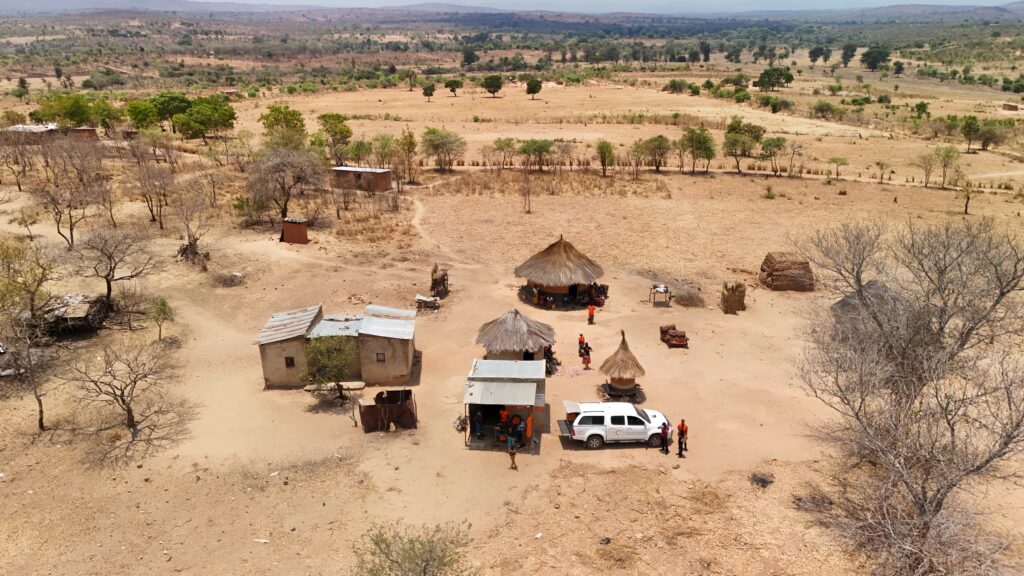
As we’ve observed across our work in Malawi and Vanuatu, it was very clear that repair is far more than a technical service — it’s a social lifeline that keeps households lit, phones charged, and small businesses open after dark. My travels also helped me appreciate the vast distances that solar companies and technicians need to traverse to reach and support rural communities across Zambia – a profound challenge that Sunny Money grapples with as they seek to advance the repair of off-grid solar products that households rely on for basic energy services. This is in contrast to neighbouring Malawi, where population density is considerably higher, and travel distances are much lower.
Below, are some key insights from my conservations with customers and Sunny Money’s repair agents in the field – sales agents who have also been trained on how to perform basic in-field repairs.
Customer and Repair Agent Insights
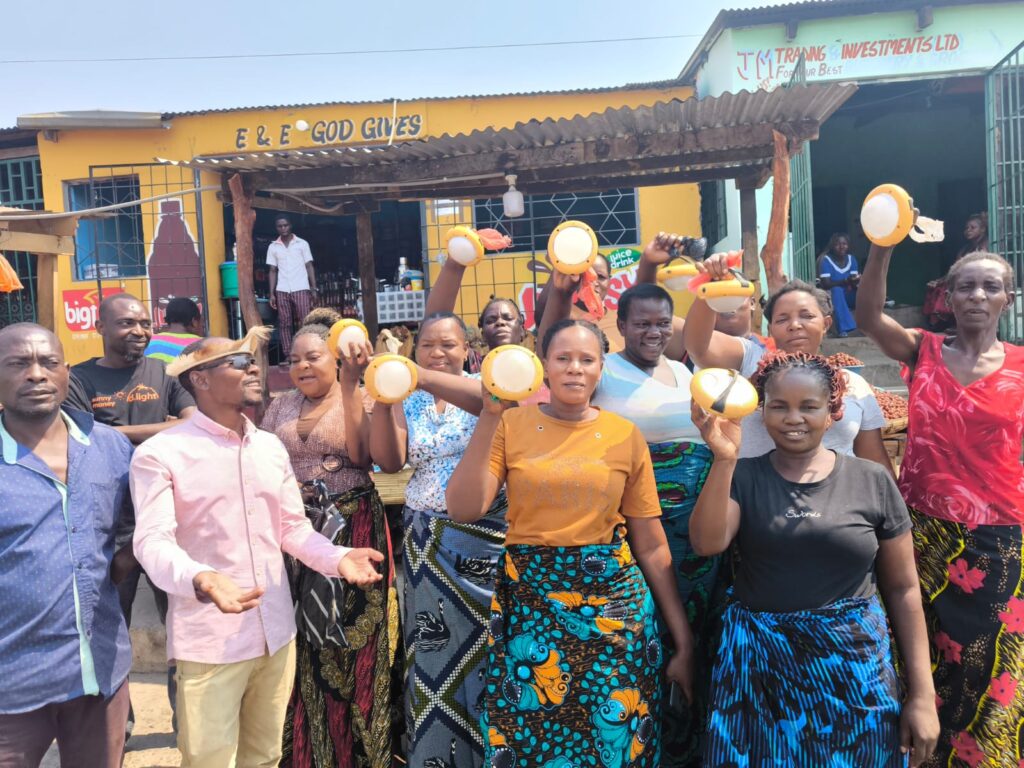
- Overall, it was clear that customers overwhelmingly prefer repair to replacement as they tended to have an emotional conection with their products (due to its positive impact on their lives) and/or founded it to be the more affordable option. Repairs, usually battery or switch replacements, typically cost ZMK 80–140 (AUD 6-10), and when cash isn’t available people sometimes barter; trading chickens or waiting for a sales team to transport a broken unit to a technician. Distance and transport are the biggest barriers. ISunny Money had adopoted a “batched” approach to repairs in response, where their vehicles pickup batches of faulty products when passing through to pass on to closest repair agent, however this can still results in waits of weeks.
- What also came through very strongly in my conversations was that repair agents like Smart and Mengezi are trusted community figures. Their strong standing in the community, and acts of compassion (e.g. free repairs) drives both sales and trust in handling repair work. They also exemplified growth in their capabilities as tecnicians through training provided by Sunny Money, starting with simple battery swaps and now soldering and PCB diagnostics on the job, turning repair into a meaningful income stream, especially as they are able to expand into the repair of a wider range of electronics.
- Technicians and workshop staff reported that roughly 80% of faults are battery-related, with the remainder involving PCBs and other components — a pattern that shapes procurement and training priorities, and is consistent with our findings across similar research with small-scale solar systems in Malawi and Vanuatu.
Systemic challenges
There are several systemic challenges that consistently came up across my conversations – particularly with technical staff, repair agents and waste management professionals.
- Parts and design: Many products are hard to open or lack standardised parts; some models are effectively “welded shut,” and manufacturers often stop supporting older designs or require unrealistic minimum orders for spares.
- Power and tools: There is an off-grid paradox in that repair agents often lack reliable electricity for soldering and must travel to trading centres to access the grid or pay to use it. Battery-powered tools and local spares hubs would make a big difference in this context and are being planned out by Sunny Money.
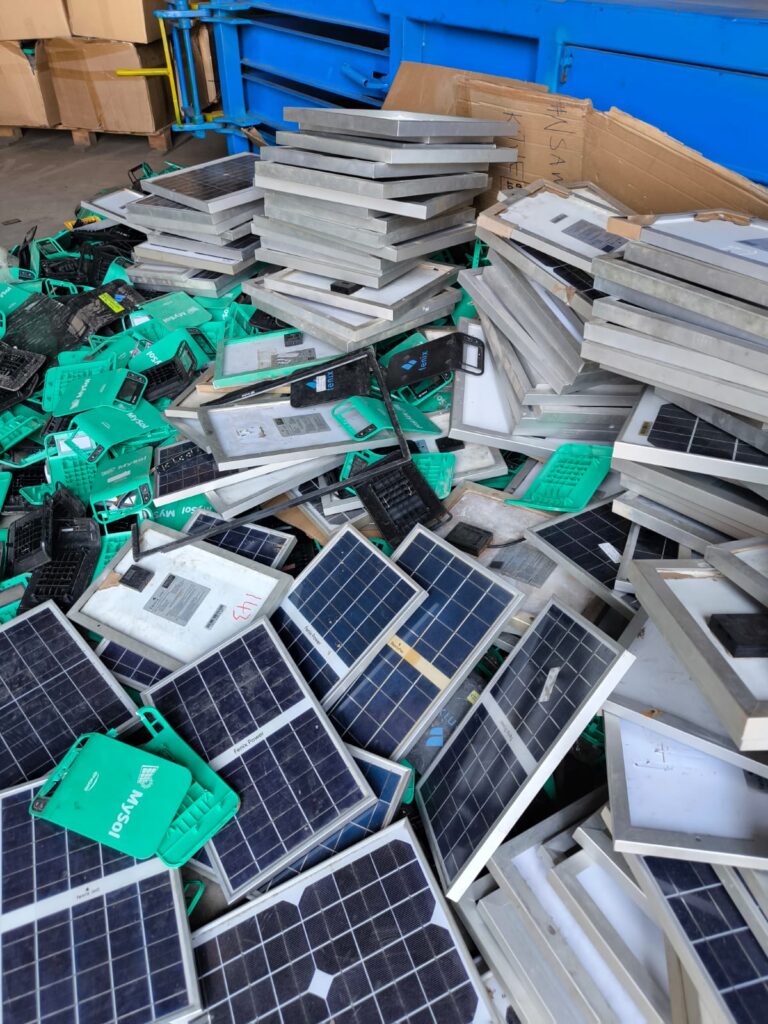
- E‑waste: E-waste processing is still at a very nascent stage in Zambia with only a handful of operations having the capacity to collect, process and export for further processing (usually to the West or East Asia). The business model around e-waste is challenging as e-waste recycling is not mandated, it is voluntary, meaning that there volumes are often low and inconsistent. A particular concern I noted was regarding Li-ion battery disposal, as no sustainable local solution currently exists beyond stockpiling. This is a looming challenge, as Li-ion batteries are also the key point of failure in solar products.
My week in Zambia was eye-opening. I gained a clear sense of the country’s energy challenges and the practical difficulties of running a repair programme across vast, sparsely populated rural areas — from long travel distances to limitations posed by product design, and access to spare parts and tools. At the same time, I was inspired by the Sunny Money team’s commitment to extending the life of essential solar products and by the skill, resourcefulness, and dedication of community repair agents who are eager to learn and serve their communities.